


Quick Answers
How do I pick a good chiropractor?
Choose someone licensed and evidence-based. Look at Google Reviews, and ask people around your community. Read about the Chiropractor – do you feel you can connect with this person?
What should I look for in their approach?
They should follow modern clinical guidelines, perform a thorough exam, provide clear goals, integrate exercise and education, and track progress. Regrading technique: Would you prefer hands-on care, or tech-based care where the Chiropractor uses a tool to adjust your spine.
What are the red flags?
Hard-sell “lifetime” plans, and grand cure-all claims.
How many visits should I expect?
This depends on your goals – short-term pain relief only, or long-term solution. Healing time varies significantly from person to person. If you’re after short-term relief only, some get that quickly within the first few visits – while others not until 6 or more. But realise that if you don’t solve the issue fully, it is likely to return sooner than later. Long-term solutions take much longer, and vary on many factors: how long has the issue been a concern, severity of injury, past injuries, among other factors.
Finding the right chiropractor can be confusing — especially with so many styles, philosophies, and marketing claims online. As someone who has spent nearly 20 years helping patients recover from disc injuries and chronic back pain at Fairway Chiropractic Centre in Kitchener (Waterloo–Cambridge region), I’ve seen firsthand how the right clinician makes a world of difference. I have actually not been at this office for 20 years, I was in Australia for 15 years, then pro-bono work in Nicaragua for a year, and then where I am currently after purchasing Fairway Chiropractic Centre from now-retired Dr. Steve Murdoch. You can read more about my bio here.
This guide will help you quickly spot a qualified, ethical, and evidence-based chiropractor — so you can get results safely and confidently.
1. Verify Training, Licensure – Are they in good standing with the profession?
A good chiropractor starts with solid credentials. They should be licensed in your province or state and graduated from an accredited chiropractic college. In Canada, that means programs approved by the Council on Chiropractic Education Canada.
You can check licensure through your provincial college (e.g., College of Chiropractors of Ontario). You can look up to see if they are in good standing with the college, or have had any complaints made against them. How to do this: go to this website: https://cco.ca.thentiacloud.net/webs/cco/register/?t=1, then type the last name of the Chiropractor you are interested in. This will tell you if that Chiropractor is in good standing or has had any significant legal complaints made against them.
2. Look for Evidence-Based Care — Not One-Size-Fits-All Programs
Top chiropractors follow evidence-based clinical guidelines from the American College of Physicians (ACP) and the National Institute for Health and Care Excellence (NICE). They also follow best evidence practices from people like Dr. James Chestnut at https://innatechoice.com/ where they teach Evidence-Based Wellness and Prevention to Chiropractors around the world.
All of the above organizations recommend starting with non-drug treatments for low back pain — including exercise, education, and manual therapy such as a Chiropractic adjustment (also known as spinal manipulation) — as part of a comprehensive care plan (ACP Guideline, Annals of Internal Medicine, 2017; NICE Guideline NG59, 2016).
At Fairway Chiropractic, we emphasize that adjustments alone are not a magic fix. They should be combined with movement training, disc rehabilitation, and education on how to prevent recurrence — especially for disc injuries and sciatica.
3. Expect a Thorough Assessment and Diagnosis
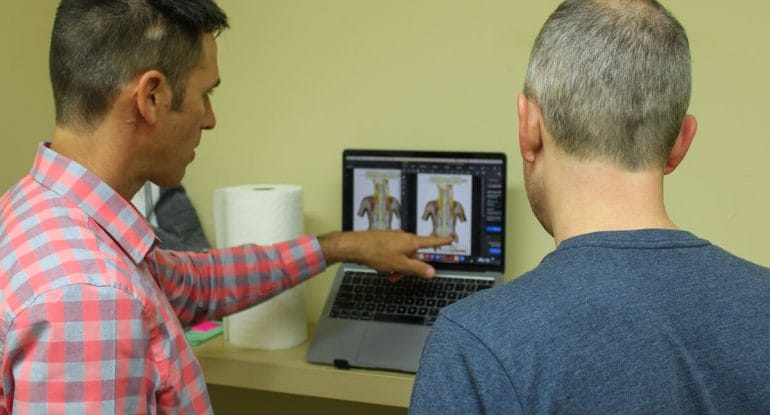
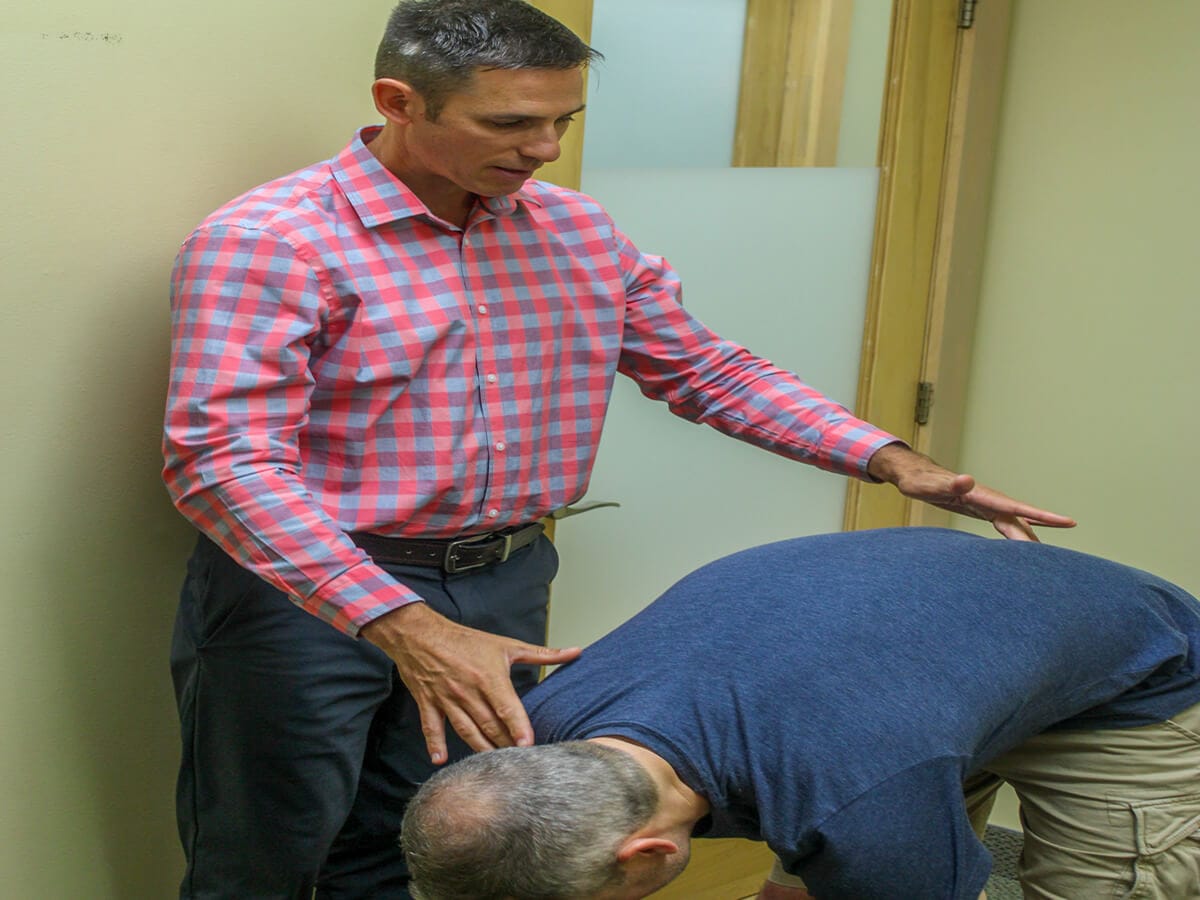
Before any treatment begins, a competent chiropractor will complete a detailed history and physical examination. This includes neurological and orthopedic tests and, when appropriate, review of imaging results.
Red-flag screening is essential to rule out serious conditions such as fractures, tumours, or infection. For most simple mechanical back or neck pain, imaging (like X-rays or MRI) is not needed initially, according to ACP and NICE recommendations.
4. Ask if the Chiropractor Provides a Clear, Personalized Treatment Plan
A strong treatment plan should outline:
- How many visits are expected initially
- What specific techniques will be used (chiropractic adjustments, decompression, soft-tissue work, etc.)
- Home care instructions — examples: stretching, McGill core exercises, ergonomic posture advice
- When and how progress will be re-evaluated
Good clinics set functional goals, not just pain scores — for example, “able to sit 45 minutes without leg pain,” or “return to playing hockey twice a week.”
This approach is supported by the Mayo Clinic <link: https://www.mayoclinic.org/> and Cleveland Clinic <link: https://my.clevelandclinic.org/>, both of which note that Chiropractic adjustments work best when combined with exercise and self-care.
At Fairway Chiropractic Centre, we re-evaluate regularly to ensure progress and adjust the plan — whether that means more active rehab, changing the type of care provided, non-surgical disc repair spinal decompression therapy, or transitioning to maintenance care if that is part of your goals. Ultimately, our goal is to care for you just as we would our very own family members. This means we make recommendations the same way we would if you were our brother/sister/child/ or parent. It also means we communicate with respect and caring love. We want you to be in control of your care every step of the way – not just follow our advice because we said so. When providing our best recommendation for you to achieve your goals – we will always provide alternative options knowing that not everyone can follow through with the best case scenario – due to time or financial restrictions. That’s okay! We’re here for you no matter what you choose – we just want you to know the best option and we’ll modify where needed as long as you understand that this means it may take longer to reach your goals.
5. Understand Benefits, Limits, and Safety — Without the Hype
Modern research shows Chiropractic adjustments can provide modest but meaningful relief for conditions like low back pain, neck pain, and tension-type headaches — particularly when combined with active exercise and education.
- The American College of Physicians (ACP) and NICE both include manual therapy among effective first-line options for mechanical back pain.
- Mayo Clinic and Cleveland Clinic describe chiropractic adjustment as generally safe when performed by a licensed professional.
- Forbes Health and similar mainstream outlets highlight that serious complications are extremely rare.
At Fairway Chiropractic Centre, neck techniques are individualized, with gentler options available when indicated.
6. Watch for Red Flags in Clinic Policies
Even on Reddit’s r/Chiropractic, patients and clinicians agree on what not to tolerate:
- Hard-sell “lifetime” or large prepaid plans — you shouldn’t feel pressured into hundreds of visits upfront.
- Routine X-rays for everyone — contrary to guideline-based care.
- Grandiose claims (“we fix every disease”) — chiropractic helps musculoskeletal issues, not internal organ conditions. However, reducing stress on the nervous system will allow your body to function better and, as a consequence, recover from various organ/systemic conditions. Chiropractic does not cure these organ/systemic conditions – your body does. But chiropractic can help your body get into a state of less stress by reducing the physical musculoskeletal stress on your nervous system.
- No collaboration — a quality chiropractor will coordinate with your family doctor or physiotherapist when necessary.
An ethical provider explains their recommendations transparently and welcomes your questions about cost, frequency, and expected outcomes.
At Fairway Chiropractic in Kitchener, Ontario — we encourage lots of questions. We believe in the power of the mind as a key healing ingredient. The better you understand your situation, the better you can feel in control of your situation.
7. “What Good Sounds Like” — Seven Smart Questions to Ask
Here’s how to interview your chiropractor before committing:
- “How do you decide when to adjust — and when not to?”
Ideal answer: “Based on your exam findings — not just on the location of your pain, because where your pain is, is not always where the problem is originating from. We never adjust areas that don’t need it.” - “Do you follow current professional guidelines for back pain?”
Ideal answer: “Yes — we combine Chiropractic adjustments, exercise, and education as part of an evidence-based plan.” - “What’s your imaging policy?”
Ideal answer: “Only when red flags or specific clinical indicators exist.” - “What outcomes will we track?”
Ideal answer: “Pain reduction, functional movements and goals, and activity milestones.” - “How many visits will I likely need?”
Ideal answer: “We start with a short trial; if you improve, we gradually space visits and shift toward maintenance care and self-management depending on your situation and goals.” - “What home care will I have?”
Ideal answer: “Individualized exercises, posture corrections, and ergonomic advice.” - “If things don’t improve?”
Ideal answer: “We’ll re-evaluate, collaborate with your doctor, or refer as appropriate.”

8. Technique Options. Know the Adjusting Techniques that the Chiropractor Provides
Viral “chiropractic crack” videos rack up millions of views, but loud noises aren’t the goal — functional recovery is.
Forbes Health reminds patients that spinal adjustments (popping or not) simply release joint pressure; what counts is improved mobility, symptom relief, and a better functioning spine for day-to-day life and performance.
Look for clinics emphasizing assessment, movement quality, and long-term results — not theatrics.
Some Chiropractors will only use one particular technique – and this works great for some, and not for others.
Some Chiropractors use a variety of techniques depending on the patient’s situation and preferences.
If you know what your preferences are (e.g. hands-on care vs. tool-assisted tech-based care, firm vs. gentle), then ask what you will be getting at this office before booking your appointment.
Fairway Chiropractic Centre’s motto, “Align. Heal. Thrive.”, captures that philosophy: restore proper movement, let tissues heal, and build habits that keep you thriving. We are a Hands-On Chiropractic office, however, we modify our techniques significantly based on the patient’s situation and preferences.
Get in Touch With Fairway Chiropractic
If you’re looking for a chiropractor who combines evidence-based care, clear communication, and a personalized plan — we’re here to help.
Fairway Chiropractic Centre has particular interest in:
- Chiropractic adjustments (hands-on)
- Non-Surgical Spinal Decompression Therapy for Disc Herniations and Disc Degeneration
- Disc herniation & sciatica recovery
- Posture & movement rehabilitation
- Custom orthotics for alignment and gait
- Pediatric Care from infancy through teenage years.
Located in the Kitchener–Waterloo–Cambridge region
Call us to schedule your first visit: 519-748-5535
Learn more or book online: FairwayChiropractic.com
Whether you want a short-term relief plan or a long-term solution, our team will guide you step-by-step toward feeling and functioning your best.
About the Author
Dr. Nikola “Nik” Dukovac, Chiropractor
Dr. Nik is the owner and clinic director of Fairway Chiropractic Centre and the Disc Repair Clinic (a division of Fairway Chiropractic focussed on Disc Herniation Injuries and Disc Degeneration) in Kitchener, Ontario.With nearly 20 years of chiropractic experience across Australia, Nicaragua, and Canada, he specializes in disc injury rehabilitation, Non-Surgical Spinal Decompression Therapy, and movement-based recovery using principles developed by world-renowned spine expert Dr. Stuart McGill.
Dr. Nik has helped thousands of patients overcome disc herniations, sciatica, chronic back pain, arthritis, and posture-related conditions using a combined approach of chiropractic adjustments, non-surgical spinal decompression therapy, exercise, and long-term movement strategies. He has also authored multiple peer reviewed research articles in a scientific Chiropractic Journal.
https://www.apcj.net/site_files/4725/upload_files/CR-DukovakColicReflux(1).pdf?dl=1
https://www.apcj.net/site_files/4725/upload_files/CR-DukovakInfantROM.pdf?dl=1
https://www.apcj.net/site_files/4725/upload_files/CR-DukovakBreastfeeding(1).pdf?dl=1