



One of the most common questions parents ask is:
“What age should someone first see a chiropractor?”
It’s a thoughtful question, and the answer often surprises people.
Chiropractic care isn’t something reserved only for adults with back pain. In fact, it is very normal and increasingly common for parents to bring their newborn infants and young children to a chiropractor for gentle spinal checkups — not because something is “wrong,” but because they want to support their child’s development and nervous system function from the very beginning.
Let’s unpack what that means, and what the evidence actually shows.
The Short Answer
There is no minimum age to see a chiropractor.
People may benefit from having their spine and nervous system assessed:
- As newborns
- As children and teenagers
- As adults
- As seniors
Concerns change with age, but the principle remains the same:
reduce unnecessary stress on the nervous system and support healthy function.
I checked both of my children within their first day of life to reduce the upper neck tension from the birth process.
Why Would a Newborn See a Chiropractor?
This is often surprising at first — but for many families, it feels completely natural.
Birth Is a Physical Event
Birth, even when uncomplicated, is one of the most physically demanding events the human body experiences — for both baby and mother.
During labour and delivery, an infant’s head, neck, and spine are exposed to compression, rotation, and traction forces. These forces occur during both vaginal and cesarean births and can contribute to areas of restricted movement or tension within the spine.
A chiropractic check in infancy does not assume injury or disease. Instead, it evaluates how freely the spine is moving and whether there are areas of mechanical tension that may influence nervous system input and movement comfort (Pohlman & Holton-Brown, 2012).

Chiropractic Care for Infants Is Extremely Gentle
This is an important distinction.
Chiropractic care for infants looks nothing like adult care.
There is:
- No cracking
- No forceful thrusts
- No twisting
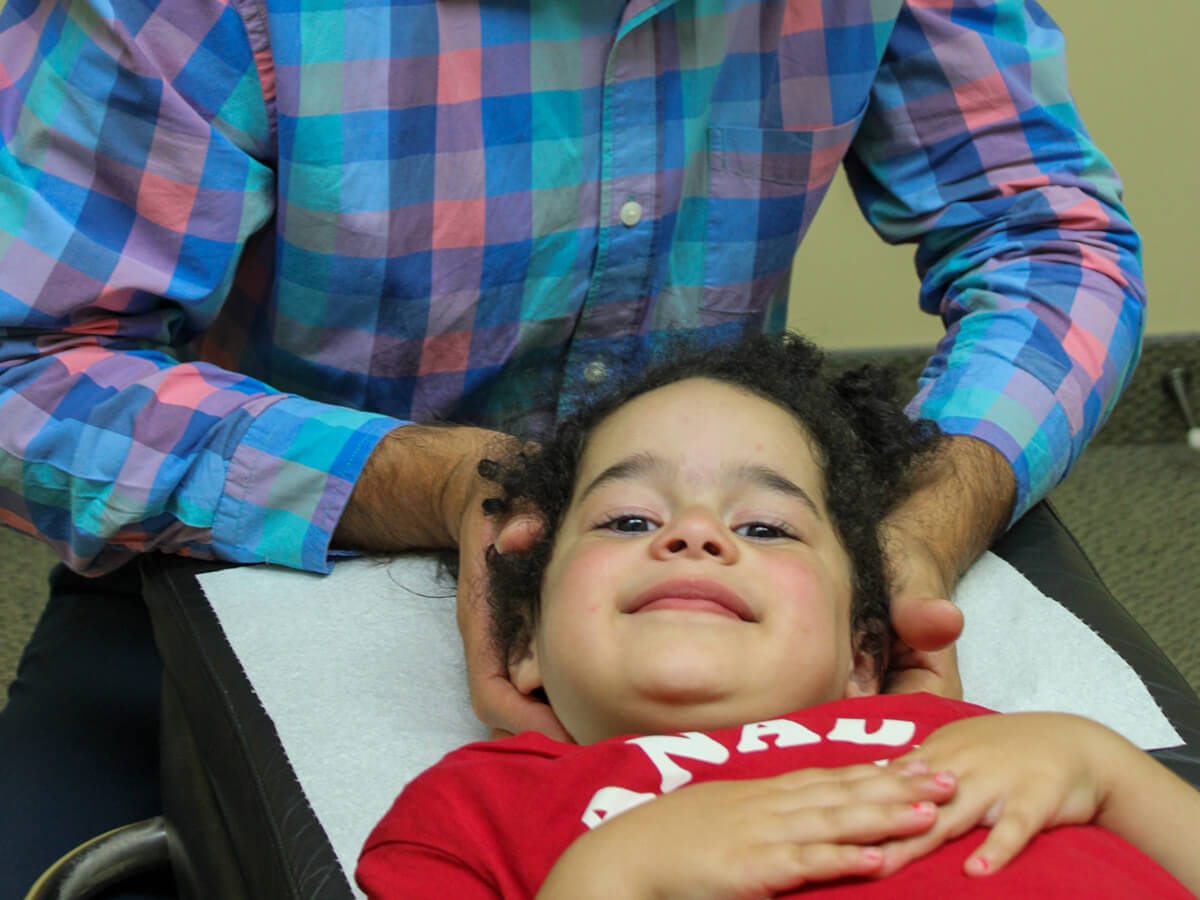
Care involves very gentle, precise fingertip pressure and careful movement assessment — often no more pressure than you’d use to test the ripeness of a tomato.
Professional guidelines emphasize that pediatric Chiropractic care must be age-appropriate and delivered by clinicians trained in pediatric assessment and technique modification (Chiropractic Canada).
Many parents are surprised by how calm and relaxed their baby is during and after a visit.
What Does the Research Say?
The scientific literature on Chiropractic care for infants and children is more limited than adult spinal care research, particularly for non-musculoskeletal concerns.
Systematic reviews note that Chiropractic care is commonly used in pediatric populations, but that the quantity and quality of evidence varies depending on the condition being studied (Miller et al., 2008).
From a safety standpoint, published reviews report that most adverse events associated with pediatric manual therapy are mild and transient, such as temporary soreness or irritability. No serious adverse events have been recorded, though continued research and proper clinical judgment remain essential (Todd et al., 2015).
Read more about safety of Chiropractic here.
These findings reinforce two key points:
- Pediatric Chiropractic care should be delivered conservatively and appropriately
- Thorough assessment and practitioner training matter
Chiropractic Does Not “Treat” Conditions in Children
It’s important to be very clear.
Chiropractic care does not diagnose or treat medical diseases in infants or children.
Instead, it aims to reduce mechanical stress on the spine so the nervous system can function with less interference. Research shows that spinal joint mechanics influence sensory input, muscle coordination, and motor control — the neurological basis for Chiropractic care across all age groups (Pickar, 2002–2012).
When nervous system stress is reduced, the body may adapt and function more efficiently. Sometimes parents notice improvements in comfort, movement, feeding, or sleep — not because Chiropractic is “curing” anything, but because the body is functioning under less stress.
This aligns with the ADIO principle:
Above-Down, Inside-Out — the nervous system governs how the body functions and heals, from the Brain down the spinal cord, and out to the rest of the body. A chiropractor’s objective is to reduce interference in this communication pathway by improving the function of the spine.
Why Parents Choose Early Spinal Checkups
Parents who bring infants and children to a chiropractor often describe their decision as proactive rather than reactive — similar to dental checkups or vision screening.
Common reasons include:
- Supporting healthy movement and posture development
- Reducing tension following birth
- Monitoring spinal function during growth spurts
- Addressing everyday physical stress from falls, play, sports, and screen time
They are not seeking treatment for a diagnosis, but reassurance that their child’s spine is moving well and that unnecessary mechanical stress is minimized (Chiropractic Canada).
Teenagers and the Modern World
Teenagers face unique physical stresses today:
- Extended screen time
- Prolonged sitting
- Heavy backpacks
- Sports specialization and repetitive strain
Many parents bring teenagers in not only for pain, but for postural changes, stiffness, headaches, or reduced movement quality. Early assessment during these years can help address developing patterns before they become entrenched.
Adults Often Say, “I Wish I’d Come Sooner”
Most adults first seek Chiropractic care because something hurts — often after years or decades of accumulated spinal stress.
Chiropractic care can still help at this stage, but many adults later say they wish they had their spine checked before pain became chronic.
This perspective is supported by adult research. The Ontario Ministry of Health-commissioned Manga Report concluded that Chiropractic care was as effective or more effective than medical management for low back pain and more cost-effective when used earlier in the course of care (Manga et al., 1993).
So… What’s the Best Age to Start?
There isn’t one “correct” age. In my opinion, the sooner the better. The key is making sure that you, as a parent, have found a chiropractor that you are comfortable and confident with.
The best time to see a chiropractor is before problems become significant.
That might be:
- As a newborn, for a gentle spinal check
- As a child, to support growth and movement
- As a teenager, to address posture and load
- As an adult, to restore function
- As a senior, to maintain mobility
Just like dentistry, you don’t wait for cavities before seeing a dentist.
Final Thought
Chiropractic care isn’t about belief.
It’s about mechanics, nervous system function, and appropriate application.
When delivered by a properly trained clinician using age-appropriate techniques, Chiropractic care can be part of a thoughtful, conservative approach to lifelong spinal and nervous system health — from day one onward.
References
- Miller JE, Benfield K, Smith C.
Chiropractic care for children: A systematic review of the literature.
Journal of Manipulative and Physiological Therapeutics, 2008. - Todd AJ, Carroll MT, Robinson A, Mitchell EKL.
Adverse events due to chiropractic and other manual therapies for infants and children: A review of the literature.
Chiropractic & Manual Therapies, 2015. - Chiropractic Canada.
Public Statement: Chiropractic Care for Children.
Canadian Chiropractic Association. - Pohlman KA, Holton-Brown MS.
Spinal health and neurodevelopment in infants: Considerations for manual assessment.
Journal of Bodywork and Movement Therapies, 2012. - Pickar JG.
Neurophysiological effects of spinal manipulation.
Journal of Manipulative and Physiological Therapeutics, 2002–2012. - Manga P, Angus DE, Papadopoulos C, Swan WR.
The Effectiveness and Cost-Effectiveness of Chiropractic Management of Low-Back Pain.
Ontario Ministry of Health, 1993. - Fairway Chiropractic Centre.
Chiropractic Care for Children.
https://fairwaychiropractic.com/chiropractic-care-for-children/
Author
Dr. Nik Dukovac, B.Sc., D.C.
Chiropractor | Fairway Chiropractic CentreDr. Nik Dukovac is a Chiropractor serving the Kitchener–Waterloo–Cambridge community with a focus on family-based, evidence-informed Chiropractic care. He has advanced training in spinal neurobiomechanics and extensive experience assessing and caring for patients across all stages of life — from newborn infants to seniors.
Dr. Dukovac regularly sees infants and children in his practice and applies age-appropriate, gentle techniques focused on optimizing spinal movement and nervous system function. He has published multiple peer-reviewed clinical case studies and has received pediatric referrals from nurses, nurse practitioners, midwives, lactation consultants, physiotherapists, and medical doctors.
Guided by the principle that “the power that made the body heals the body,” Dr. Dukovac emphasizes careful assessment, minimal-force Chiropractic adjustment when appropriate, and collaboration with other healthcare providers to support healthy development, resilience, and function from the very beginning of life.