


Quick Summary
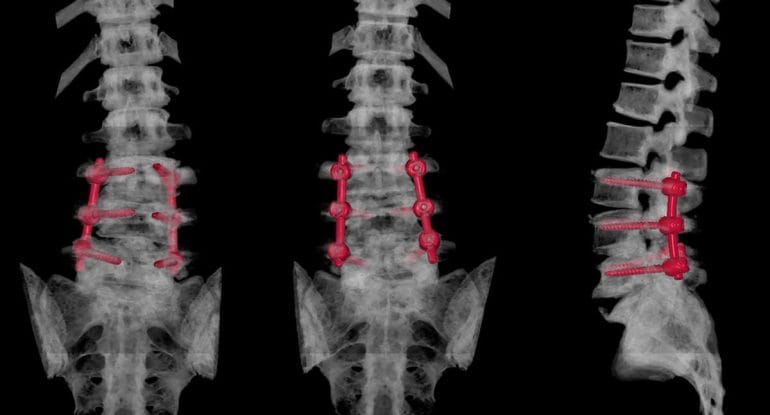
- Research shows spinal surgery for chronic low back pain has highly variable success rates, with only about 60 percent of patients achieving meaningful pain improvement.
- Functional outcomes such as return to work are inconsistent and strongly influenced by non-structural factors.
- Spinal surgery represents an Outside In approach, attempting to fix the problem by altering anatomy.
- Non-surgical spinal decompression therapy takes an Inside Out approach, creating conditions that allow the body to heal itself.
- Clinical studies report 70 to 90 percent improvement rates in appropriately selected disc injury patients using non-surgical spinal decompression.
- For many patients in Kitchener, Waterloo, and Cambridge, non-surgical spinal decompression should be fully explored before irreversible surgery.
If you are dealing with chronic low back pain or a disc injury, spinal surgery is often presented as the final option once conservative care has failed.
However, when you look closely at the research, the success rate of spinal surgery is far less predictable than most patients expect.
A large 2022 systematic review published in The Journal of Pain evaluated outcomes following spinal surgery for chronic low back pain and leg pain. Rather than focusing on MRI changes or short-term pain relief, the researchers examined real functional recovery, including return to work and long-term outcomes.
The findings raise important questions for anyone considering surgery.
What the Research Says About the Success Rate of Spinal Surgery
Spinal surgery is one of the most invasive and costly interventions used to manage chronic low back pain.
According to the Journal of Pain review:
- Only about 60 percent of patients undergoing first-time lumbar spine surgery experience a minimal clinically important reduction in pain
- Return-to-work rates ranged from 3 percent to 100 percent, depending on patient characteristics and study design
- Patients with ongoing pain after surgery incur approximately 50 percent higher long-term healthcare costs
This wide variability highlights a critical issue.
Surgical success is often not determined by the surgical technique, but by factors such as:
- Duration of symptoms before surgery
- Whether the patient was working prior to surgery
- Psychological health, including depression or anxiety
- Opioid use before surgery
- Social and occupational stressors
Simply changing spinal structure does not guarantee restored function.
Why Disc Replacement Surgery Does Not Eliminate the Problem
Artificial disc replacement is often marketed as a modern alternative to spinal fusion. While it preserves motion, long-term data shows that disc replacement does not reliably outperform other spinal surgeries in terms of pain relief, disability reduction, or functional recovery.
The research consistently shows that once pain becomes chronic, outcomes are driven more by:
- Nervous system sensitization
- Movement patterns and spinal biomechanics
- Load tolerance and tissue health
rather than by the specific disc that is replaced.
Spinal Surgery as an Outside In Approach
Spinal surgery is a classic Outside In approach to healthcare.
An Outside In approach attempts to fix pain by externally altering the body, such as removing tissue, replacing discs, or fusing joints, with the expectation that symptoms will resolve afterward.
For emergencies such as progressive neurological loss or spinal instability, surgery can be necessary and appropriate.
However, for chronic disc-related pain, an Outside In solution often fails to restore full function because it does not address how the body adapts, compensates, and heals over time.
This is why many patients report that surgery changed their imaging but not their quality of life.
Non-Surgical Spinal Decompression Therapy as an Inside Out Approach
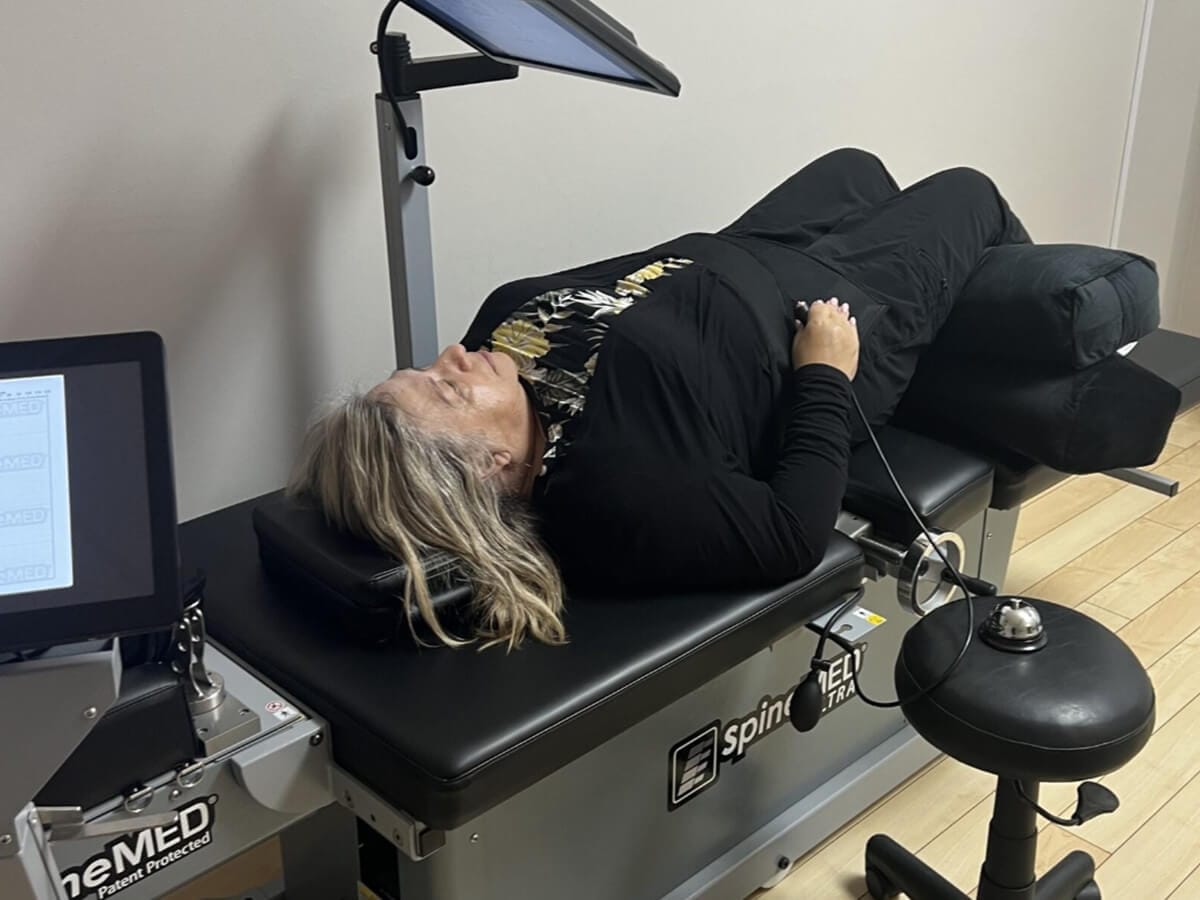
Non-surgical spinal decompression therapy follows a fundamentally different philosophy.
It is an Inside Out approach that works by restoring the conditions required for the body to heal itself.
Non-surgical spinal decompression is designed to:
- Reduce abnormal pressure inside injured spinal discs
- Improve fluid movement and nutrient exchange
- Decrease mechanical irritation of spinal nerves
- Support disc healing while preserving natural spinal motion
This approach aligns with the principle that the power that made the body heals the body, when interference is reduced and proper mechanics are restored.
Clinical studies report 70 to 90 percent improvement rates in pain and function in properly selected patients with disc bulges, disc herniations, and degenerative disc changes.
At Fairway Chiropractic Centre and the Disc Repair Clinic, non-surgical spinal decompression is combined with Chiropractic care and movement-based rehabilitation to support long-term results.
Learn more about
Non-Surgical Spinal Decompression Therapy
https://discrepairclinic.ca/spinal-decompression-therapy/
Comparing Success Rates Honestly
Spinal Surgery
- Approximately 60 percent achieve meaningful pain reduction
- Functional recovery varies widely
- Higher long-term healthcare costs when pain persists
- Permanent structural changes
Non-Surgical Spinal Decompression Therapy
- 70 to 90 percent report significant improvement in clinical studies
- Focuses on restoring function rather than altering anatomy
- Non-invasive and lower risk
- Preserves future treatment options
These approaches are not competitors. They are tools for different situations. The issue arises when surgery is used before conservative Inside Out options are fully explored.
Chiropractic Care and Disc Healing in Kitchener, Waterloo, and Cambridge
For many patients in Kitchener, Waterloo, and Cambridge, disc injuries respond best to a combined approach that addresses:
- Spinal mechanics
- Nervous system function
- Disc loading and movement patterns
At Fairway Chiropractic Centre, Chiropractic care is tailored to each patient using appropriate force techniques and individualized planning.
Listen to one of our patients success stories here who was able to avoid spinal surgery:

Learn more about
Disc Repair Clinic, a division of Fairway Chiropractic Centre focussed on Disc Injuries
https://discrepairclinic.ca/
Want to find out if Non-Surgical Spinal Decompression Therapy is right for you? Book a Consultation with Dr. Nik
Button to complete form for this purpose.
Frequently Asked Questions
Is spinal surgery always a bad idea?
No. Surgery can be appropriate for specific conditions such as progressive neurological loss, spinal instability, or emergency situations. It is often overused for chronic disc pain.
Why does spinal surgery fail so often for chronic back pain?
Because chronic pain involves nervous system changes, biomechanics, and movement adaptations, not just disc structure.
Is non-surgical spinal decompression a replacement for surgery?
Many of our patients have avoided spinal surgery. It is best viewed as a conservative Inside Out option that should be explored before irreversible surgery.
Can spinal decompression help disc bulges or herniations?
Yes. In properly selected cases, decompression can reduce disc pressure and support healing without surgery.
Research References
- Halicka M, Duarte R, Catherall S, et al. Systematic Review and Meta-Analysis of Predictors of Return to Work After Spinal Surgery for Chronic Low Back and Leg Pain. The Journal of Pain. 2022.
PIIS1526590022000323 - Deyo RA, Mirza SK. The Case for Restraint in Spinal Surgery. Spine Journal.
- Weir S, Samnaliev M, et al. Incidence and Healthcare Costs of Persistent Pain After Lumbar Spine Surgery. BMJ Open.
- Zweig T, et al. Outcomes Following Lumbar Disc Surgery and Disc Replacement. European Spine Journal.
- Cholewicki J, McGill SM. Mechanical Stability of the Spine and Low Back Pain. Clinical Biomechanics.
Author
Dr. Nik Dukovac, B.Sc., D.C.
Chiropractor | Fairway Chiropractic CentreDr. Nik Dukovac is a Chiropractor serving the Kitchener–Waterloo–Cambridge community with a focus on personalized care. He has advanced training in spinal neurobiomechanics and works extensively with patients experiencing disc injuries, disc degenerative disease, chronic back pain, and persistent spinal symptoms that remain unexplained despite imaging or medical testing.
Dr. Dukovac’s approach emphasizes an Inside Out healing strategy that support the body’s natural ability to heal, restore movement, and improve long-term function.