



This is one of the most common — and most reasonable — questions patients ask in our Kitchener–Waterloo–Cambridge clinic: “Who should I see, a physiotherapist or Chiropractor? Or “How is Chiropractic different from physiotherapy or massage therapy?” The confusion makes sense. All three professions work with the body, movement, and pain. All can be helpful. And in many cases, they work best together, not in competition. The key difference is what each profession is primarily focused on — and how that focus affects healing.
The Big Difference (In Plain Language)
At a high level: Your brain and nervous system controls everything in your body. Chiropractic focuses on removing interference in the communication system between brain and body by improving spinal alignment. This being said, Chiropractic helps make sure your body is getting full, clear power from the brain, while massage therapy and physiotherapy work on the parts that use that power — the muscles and joints.
- Massage therapy focuses on muscles and soft tissues
- Physiotherapy focuses on rehabilitation, strength, and movement retraining
- Chiropractic focuses on spinal alignment and optimizing the power to your body systems via nervous system function.

Massage Therapy: Working on Muscles and Tension
Massage therapy primarily addresses:
- Muscle tightness and trigger points
- Fascial restriction
- Circulation
- Stress-related muscle guarding
Massage is excellent for:
- Muscle soreness
- Stress relief
- Short-term pain reduction
- Improving tissue flexibility
Many people feel immediate relief after massage — and that relief is real and valuable. However, massage does not correct joint alignment or restore spinal motion. If muscle tension is being driven by restricted spinal joints or altered nervous system input, the relief may be temporary. This is why some people feel better after massage, but the tightness keeps returning.

Physiotherapy: Rebuilding Strength and Movement
Physiotherapy focuses on:
- Rehabilitation after injury or surgery
- Strengthening weak or inhibited muscles
- Improving movement patterns
- Gradual return to work or sport
Physiotherapists are experts in:
- Exercise prescription
- Load management
- Tissue healing timelines
- Functional reconditioning
Physiotherapy is essential when strength, stability, and endurance need to be rebuilt. That said, physiotherapy works on top of the existing joint mechanics and nervous system input. If spinal joints are not moving well or nervous system signaling is altered, exercises may feel harder, progress may stall, or results may not last as long.
Interesting Case Examples at Fairway Chiropractic, helping people in Kitchener-Waterloo:
I’ve seen many patients who first tried physiotherapy and experienced only minimal improvement — not because the physiotherapist wasn’t skilled, but because something more foundational was being missed. In these cases, a Chiropractic assessment revealed significant vertebral subluxations (joint misalignments) that were interfering with communication between the brain and the body, particularly to certain muscle groups. After a course of Chiropractic care to improve spinal alignment and motion, their spinal function improved substantially. While their primary concern didn’t always resolve completely at that stage, I then advised them to return to their physiotherapist. This time, the outcome was different. With improved nervous system communication and joint mechanics, physiotherapy became far more effective — and patients often experienced the progress they had been hoping for all along.
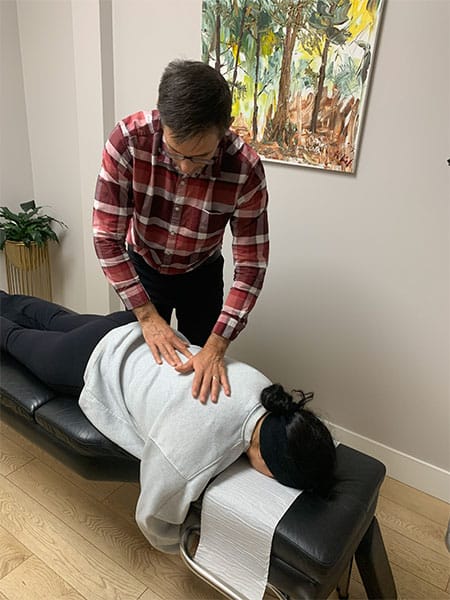 Chiropractic: Optimizing the Nervous System Through the SpineChiropractic care focuses on:
- Restoring proper spinal alignment and joint motion
- Reducing mechanical stress on the nervous system
- Improving communication between the brain and the body
The spine is not just a stack of bones — it is the primary communication pathway between the brain and every cell, tissue, and organ in the body. When spinal joints become restricted or misaligned (called a vertebral subluxation), the quality of information travelling from the brain to the body — and back again — can be altered. Research shows that spinal joint mechanics influence sensory input, muscle activation, coordination, and reflex activity (Pickar, 2002–2012).Chiropractic adjustments are specific, targeted movements designed to restore normal spinal motion and alignment. This reduces interference and allows the nervous system to function more efficiently.
Why Chiropractic Often Makes Other Therapies Work Better
This is an important — and often overlooked — point. Because Chiropractic care improves how the brain communicates with the rest of the body, it often makes other therapies more effective. Patients commonly notice that:
- Physiotherapy exercises feel easier and more coordinated
- Strength gains come faster
- Massage results last longer
- Relapses happen less frequently
Why? Because muscles, joints, and tissues respond better when they are receiving clear, accurate signals from the nervous system. In simple terms:
- Massage works on the tissues
- Physiotherapy retrains movement
- Chiropractic optimizes the control system that runs them both
This is why Chiropractic care is often an ideal starting point, especially for recurring or stubborn problems.
What About Physiotherapists Who Perform Spinal Manipulation?
Yes — some physiotherapists perform spinal manipulation. The technique may sometimes look similar.
The key difference, however, is intent.
The Difference Is Intent
In physiotherapy, spinal manipulation is typically used as a tool to:
- Improve general spinal mobility
- Reduce pain or stiffness
- Help a patient move more comfortably so they can progress with rehabilitation exercises
The goal is often global mobility — getting an area moving better so that strengthening and movement retraining can take place. In Chiropractic, spinal adjustment is not simply about movement — it is about specific segmental motion and neurological input.
Chiropractic Focuses on Segmental Specificity
A Chiropractor is trained to assess:
- Which specific spinal segments are restricted
- The direction those joints are misaligned or not moving properly
- How those restrictions affect nerve signaling and muscle control
Chiropractic adjustments are precise, targeted movements applied to specific vertebral segments in specific directions, with the intent of restoring normal joint mechanics and reducing interference to the nervous system. This level of segmental specificity is central to Chiropractic training and philosophy.
The ADIO Principle: Above-Down, Inside-Out
Chiropractic care is guided by the principle of ADIO — Above-Down, Inside-Out. This means:
- The brain and nervous system govern how the body heals and functions
- The spine plays a central role in protecting and transmitting those signals
- Reducing spinal stress improves the body’s ability to adapt, heal, and perform
Massage and physiotherapy work with the body’s tissues and movement systems. Chiropractic focuses on optimizing the communication system that controls them.
Why One Is Not “Better” Than the Others
Massage therapy, physiotherapy, and Chiropractic are not competing treatments. They address different aspects of the same problem — and when used together appropriately, they often produce the best long-term results. In our Kitchener–Waterloo–Cambridge practice, we frequently collaborate with physiotherapists and massage therapists because good outcomes come from the right care, at the right time, for the right reason.
Which One Do You Need?
That depends on several factors, including:
- The nature of your concern
- Whether the issue is primarily muscular, mechanical, neurological — or a combination
- Your goals: short-term symptom relief versus long-term function and resilience
It’s often difficult to know this on your own. However, in my experience, it almost always makes sense to first ensure that the area you’re having trouble with is receiving clear, full communication from the brain before focusing on local treatment.If the nervous system isn’t delivering full “voltage” to the muscles, joints, and tissues involved, even the best local therapy may struggle to produce lasting results. That’s why the first step in a Chiropractic assessment is to determine whether Chiropractic care is appropriate for your concern — or whether another therapy would be a better starting point, or if a combination of approaches would give you the best outcome. Good care isn’t about choosing a profession.
It’s about choosing the right sequence. Final Thought Massage therapy works on muscles.
Physiotherapy rebuilds movement and strength.
Chiropractic restores optimal communication between the brain and the body. When that communication is clear, muscles activate more appropriately, joints move more efficiently, and tissues respond better to rehabilitation. That’s why Chiropractic care often doesn’t replace physiotherapy or massage — it enhances them, helping every other form of care work more effectively and last longer.
Author
Dr. Nik Dukovac, B.Sc., D.C.
Chiropractor | Fairway Chiropractic CentreDr. Nik Dukovac is a Chiropractor serving the Kitchener–Waterloo–Cambridge community with a focus on evidence-based, individualized Chiropractic care. He has advanced training in spinal neuro bio mechanics and works extensively with patients experiencing persistent pain, disc injuries, headaches, and movement-related conditions that remain unresolved despite physiotherapy or massage therapy alone. Guided by the principle that “the power that made the body heals the body,” Dr. Dukovac emphasizes careful assessment, appropriate-force Chiropractic adjustment, and collaborative care to help patients achieve lasting results.