



Feeling dizzy can be frightening — especially when it comes out of nowhere.
Patients often tell me:
“My head just didn’t feel right, like I was off centre”
“The room felt like it was spinning.”
“I couldn’t trust my balance.”
And they’re right to take it seriously.
Dizziness and vertigo are symptoms, not diagnoses — and the first step is always ruling out anything serious. Once that’s done, many people are surprised to learn that the upper neck can be a hidden contributor.
Let’s break this down clearly, safely, and honestly.
Quick Answers
- First-time dizziness or vertigo? → See your medical doctor first.
- Dizziness can come from inner ear issues, neurological causes, infections, blood flow problems, or the upper neck.
- Chiropractic adjustment may help when the source is cervicogenic (neck-related).
- Yes — dizziness can temporarily worsen after an adjustment if the nervous system is overstimulated.
- This risk is minimized by gentle techniques, conservative care, and proper screening.
- If symptoms worsen after care → pause, reassess, and modify the approach. Many people who have experienced this have achieved resolution by following this strategy.
First-Time Dizziness or Vertigo: What Should You Do?
If you’ve never experienced dizziness or vertigo before, the safest and most responsible advice is:
See your medical doctor first.
This allows serious conditions to be ruled out, such as:
- Stroke or TIA
- Brain tumour
- Cardiac or blood pressure issues
- Inner-ear infection
- Neurological disease
It’s hard to not be stressed after reading this. And the stress can exacerbate the symptoms. Stay calm knowing that the odds of a stroke or brain tumour are very low. That being said, it is always better to be safer than sorry.
Once these are excluded and symptoms persist or recur, a musculoskeletal cause — particularly from the upper neck — deserves consideration.
Dizziness vs. Vertigo — What’s the Difference?
- Dizziness
A general sense of lightheadedness, imbalance, fogginess, or unsteadiness. - Vertigo
A specific type of dizziness where there is a false sensation of spinning or movement, either of you or the room.
The distinction matters — because different causes produce different patterns.
Common Causes of Dizziness & Vertigo
(And How They’re Often Differentiated)
1. Benign Paroxysmal Positional Vertigo (BPPV)
- Triggered by rolling in bed or looking up
- Brief spinning episodes (less than 60 seconds)
- Caused by displaced inner-ear crystals
- Identified with positional testing
2. Vestibular Neuritis / Viral Inner-Ear Inflammation
- Often follows a cold or flu
- Intense vertigo lasting days
- Nausea and imbalance
- Usually not neck-movement dependent
3. Ménière’s Disease
- Vertigo plus hearing loss, ringing, ear fullness
- Episodes last from minutes to hours
- Progressive inner-ear condition
4. Ear Infections
- Pain, pressure, fever, hearing changes
- Confirmed by medical examination
5. Neurological Causes (Stroke, Tumour, MS)
- Sudden onset
- Red flags: slurred speech, facial droop, weakness, vision changes
- Require urgent medical care
6. Cardiovascular / Blood Pressure-Related
- Lightheadedness with standing
- Palpitations or medication side effects
7. Cervicogenic Dizziness (Upper-Neck Related)
- Dizziness associated with neck pain or stiffness
- Worse with neck movement or prolonged posture (same position for too long)
- Often follows whiplash, poor posture, or chronic neck strain
- Normal scans and ear testing
- Diagnosed through history, physical exam, and exclusion of other causes
How Can the Neck Cause Dizziness?
The upper neck contains a high concentration of proprioceptive receptors
(your body’s built-in position sense — how your brain knows where your head and neck are in space without looking).
These receptors send constant feedback to the brainstem and balance centers.
When neck joints aren’t moving properly, the brain can receive conflicting sensory information, resulting in:
- Dizziness
- Unsteadiness
- Brain fog
- Visual disturbances
This mechanism is known as cervicogenic dizziness.
Can a Chiropractic Adjustment Help Dizziness or Vertigo?
Yes — in the right cases.
Research shows that manual therapy and Chiropractic adjustment can help reduce symptoms in people with cervicogenic dizziness by:
- Improving joint motion
- Normalizing proprioceptive input
- Reducing abnormal neurological signaling
Research Support
Studies published in Manual Therapy, Spine, Journal of Orthopaedic & Sports Physical Therapy, and Chiropractic & Manual Therapies demonstrate improvements in dizziness symptoms when cervical spine dysfunction is addressed.
(See full references at the end of this article.)
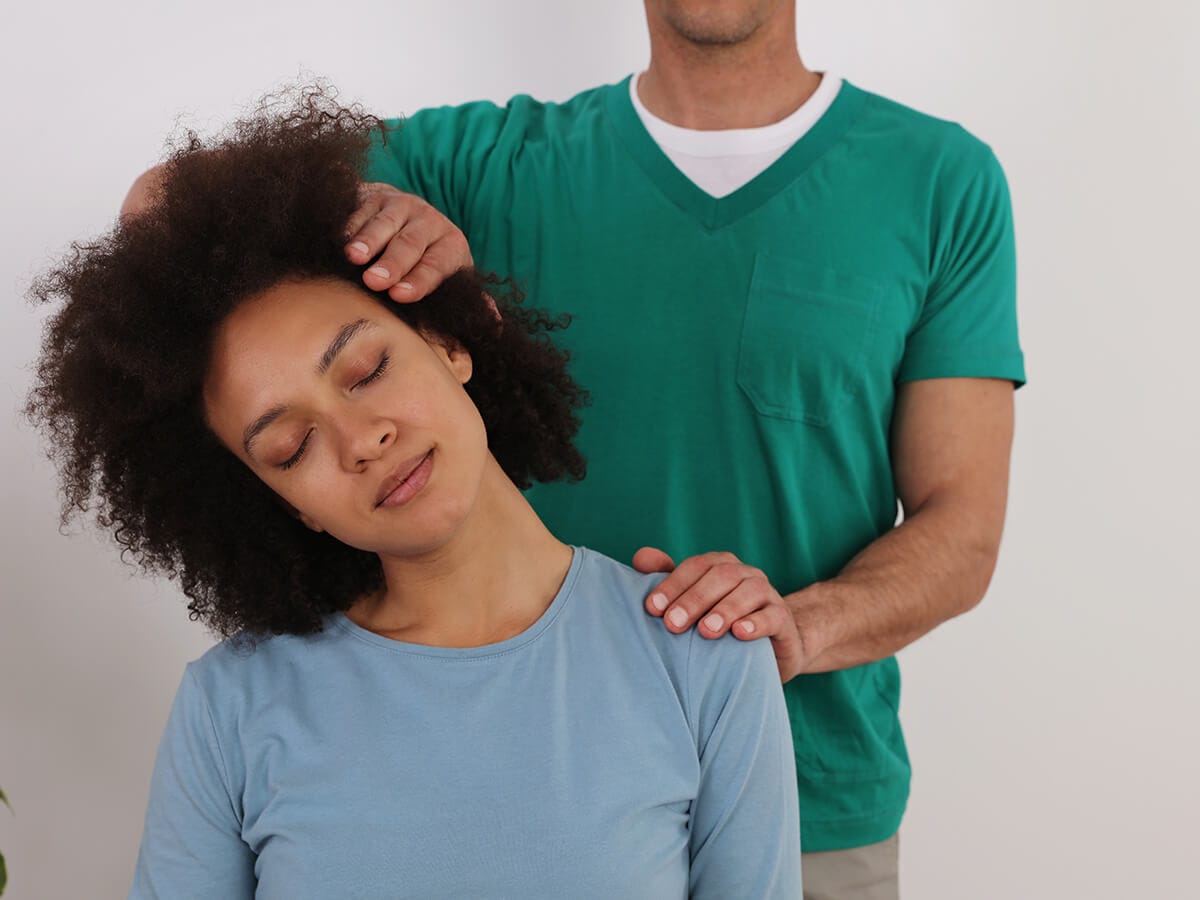
Can a Chiropractic Adjustment Make Dizziness Worse?
Sometimes — temporarily.
This does not mean injury.
It usually reflects temporary nervous system overstimulation, especially when:
- The nervous system is already sensitive
- Too much input is introduced at once
- The body hasn’t had time to adapt
This may feel like:
- Lightheadedness
- Brief vertigo
- Fatigue
- A “woozy” sensation
What Should You Do If Dizziness Worsens After an Adjustment?
- Tell your chiropractor immediately
- Pause or modify care
- Shift to gentler techniques
- Allow time for neurological adaptation
- Reassess if symptoms persist
At Fairway Chiropractic Centre, patient feedback guides care decisions.
How We Minimize This Risk
- Thorough history and red-flag screening
- Gentle, low-force techniques when appropriate
- Gradual progression of care
- Respect for nervous system tolerance
- Collaboration with medical providers when needed
There is no one-size-fits-all Chiropractic adjustment.
Real Patient Experiences With Dizziness & Vertigo
While every case is different, some patients have shared their personal experiences after Chiropractic care.
⭐⭐⭐⭐⭐ Vertigo Resolved
“I had a brief struggle with vertigo, and through his adjustments, the symptoms disappeared, and I no longer suffer from it.”
— Johnathan E., Google Review
⭐⭐⭐⭐⭐ Vertigo Becoming Milder & Less Frequent
“I’m feeling taller, stronger, more aligned, and the symptoms of vertigo are getting milder and less frequent.”
— Crystal T., Google Review
⭐⭐⭐⭐⭐ Vertigo-Like Symptoms Linked to Neck & Jaw Issues
“After years of neck and jaw issues that caused vertigo-like symptoms, I cannot believe how much this has helped me.”
— Nicole L., Google Review
Testimonials reflect individual experiences. Results vary. Chiropractic care is personalized and does not guarantee outcomes.
The Bottom Line
- Dizziness and vertigo should never be ignored
- Medical causes must be ruled out first
- When the source is cervicogenic (coming from the neck), Chiropractic adjustment may help
- Care should be personalized
Your Next Step
If dizziness or vertigo:
- Keeps returning
- Worsens with neck movement
- Remains unexplained despite testing
Book a consultation at Fairway Chiropractic Centre
Let’s determine whether your upper neck may be contributing — and what the safest next step is.
References
- Reid SA, Rivett DA. Manual therapy treatment of cervicogenic dizziness: A systematic review. Manual Therapy. 2005
https://pubmed.ncbi.nlm.nih.gov/15922235/ - Wrisley DM, et al. Cervicogenic dizziness: Diagnosis and management. JOSPT. 2000
https://pubmed.ncbi.nlm.nih.gov/10612069/ - Karlberg M, et al. Effects of cervical mobility on postural control. Spine. 1996
https://pubmed.ncbi.nlm.nih.gov/8727184/ - Lystad RP, et al. Manual therapy for cervicogenic dizziness. Chiropractic & Manual Therapies. 2011
https://pubmed.ncbi.nlm.nih.gov/22040319/
Author
Dr. Nik Dukovac, B.Sc., D.C.
Chiropractor | Fairway Chiropractic CentreDr. Nik Dukovac is a Chiropractor serving the Kitchener–Waterloo–Cambridge community with a focus on personalized care. He has advanced training in spinal neurobiomechanics and works extensively with patients experiencing complex conditions such as dizziness, vertigo, disc injuries, and persistent neck-related symptoms that remain unexplained despite imaging or medical testing.
Dr. Dukovac’s approach emphasizes appropriate force Chiropractic adjustment (from very gentle to firm based on age, patient preference and clinical situation), careful clinical assessment, and collaboration with medical providers when appropriate. Guided by the principle that the power that made the body heals the body, he helps patients restore proper movement, improve nervous system function, and regain confidence in their balance and daily activities.
Dr. Nik is actively involved in community health education, youth sports, and helping patients better understand why their symptoms occur — not just how to manage them.