


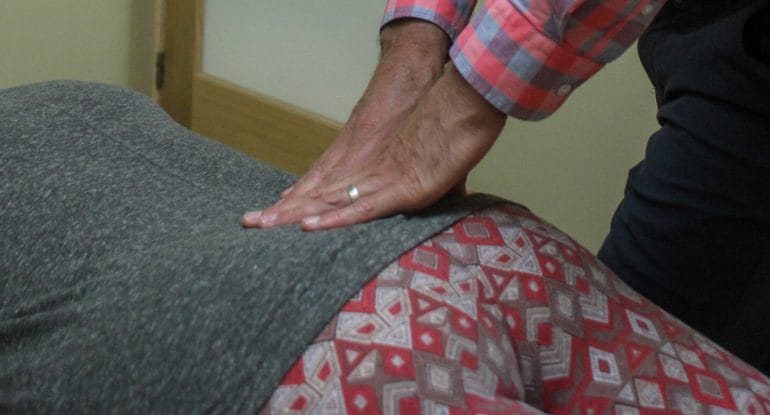
Disc related back pain can be confusing.
One day your back feels tight. The next day you may feel pain into your buttock, hip, or leg. Sometimes it feels like a deep ache. Other times it feels sharp, burning, electric, or like your back might “go out” if you move the wrong way.
So it makes sense to ask:
Would a massage help my disc related back pain?
The answer is: it may help, but it depends on what is causing your pain and what your body actually needs.
Massage can be very helpful for muscle tension, guarding, and stress around the spine. However, if your pain is coming from a disc injury, disc bulge, disc herniation, or irritated nerve, massage alone may not address the main reason the problem is there.
Quick Answer
Massage may help disc related back pain by reducing muscle guarding, improving relaxation, and decreasing tension around the lower back, hips, and pelvis.
However, massage does not correct the underlying disc mechanics, nerve irritation, spinal stress, posture problems, or movement patterns that may have contributed to the injury in the first place.
For many people, massage can be a helpful part of care. But if the pain keeps coming back, travels down the leg, causes numbness or tingling, or limits your daily life, it is important to have the spine properly assessed.
At Fairway Chiropractic Centre in Kitchener, we look at more than just the sore muscles. We want to understand why the disc became irritated in the first place, and what needs to happen so the problem gets better and stays better.
What Is Disc Related Back Pain?
Disc related back pain usually involves irritation of one or more spinal discs in the lower back.
The discs sit between the bones of your spine. They act like cushions and help your spine move, absorb load, and tolerate daily stress. When a disc becomes irritated, injured, or compressed, it can create pain in the lower back.
In some cases, the disc can also irritate a nearby nerve. This may cause symptoms such as:
- Low back pain
- Pain into the buttock or hip
- Sciatica or pain travelling down the leg
- Numbness or tingling
- Burning, sharp, or electric pain
- Pain that worsens with sitting, bending, coughing, or lifting
- A feeling that the back is unstable or vulnerable
Not every case of back pain is a disc problem. And not every disc problem requires surgery. But when the disc is involved, the care plan should be more specific than simply relaxing tight muscles.
Why Your Muscles Get So Tight With a Disc Injury
One of the most common things people notice with disc related back pain is muscle tightness.
The lower back may feel locked up. The hips may feel tight. The hamstrings may feel tense. You may feel like you need to stretch constantly.
This tightness is often not the real problem. It is usually the body’s protective response.
When a disc or nerve is irritated, the body may tighten surrounding muscles to protect the area. This is sometimes called muscle guarding. In other words, your body is trying to splint the spine to prevent further irritation.
This is why massage can feel good. It can calm the muscles down, improve circulation, and help the body relax.
But here is the important part:
If the muscle tightness is guarding an irritated disc or nerve, relaxing the muscles may help you feel better temporarily, but it may not solve the underlying problem.
That is why some people feel great after massage for a day or two, but then the pain comes right back.
When Massage Can Help Disc Related Back Pain
Massage may be helpful when there is a large muscle tension component to your back pain.
It may help with:
- Muscle guarding
- Low back tightness
- Hip and glute tension
- Stress related muscle tension
- General soreness from moving differently because of pain
- Short term pain relief
- Improved relaxation and sleep
For some people, massage can also help them move more comfortably, which can make it easier to begin appropriate exercises, Chiropractic care, or spinal decompression therapy when indicated.
Massage may be especially helpful when it is part of a broader plan that includes spinal assessment, movement correction, posture advice, and gradual strengthening.
When Massage May Not Be Enough
Massage may not be enough if your disc related pain is being driven by nerve irritation or mechanical stress on the spine.
Signs that massage alone may not be enough include:
- Pain travelling below the buttock or down the leg
- Numbness or tingling
- Weakness in the leg or foot
- Pain that gets worse with sitting
- Pain that increases with bending forward
- Repeated flare ups
- Relief after massage, but symptoms return quickly
- Difficulty walking, standing, sleeping, or working
In these cases, the question is not just, “How do we relax the tight muscles?”
The better question is:
Why are the muscles guarding in the first place?
If a disc injury is creating pressure, inflammation, or irritation around a nerve, the body will often continue to protect the area until the underlying stress is addressed.
Can Massage Make Disc Pain Worse?
Sometimes, yes.
This does not mean massage is bad. It means the timing, pressure, and technique matter.
Deep pressure directly over an acute disc injury may irritate the area. Aggressive stretching may also flare symptoms in some people, especially if the nerve is already sensitive.
If you have disc related pain, massage should usually be gentle and supportive, especially in the early stages. The goal should be to calm the system down, not force the body into positions it is not ready for.
If a massage increases leg pain, numbness, tingling, or sharp nerve symptoms, that is a sign your body may not be tolerating it well.
The Bigger Issue: Why Did the Disc Problem Happen?
This is where we believe many people miss the bigger picture.
A disc injury does not usually happen for no reason. Sometimes there is a clear injury, such as lifting something awkwardly. But many disc problems build over time.
Common contributing factors may include:
- Poor spinal mechanics
- Repeated bending and twisting
- Prolonged sitting
- Weak spinal endurance
- Poor hip movement
- Poor lifting habits
- Postural stress
- Previous injuries
- Lack of core stability
- Not enough recovery between physical stressors
At Fairway Chiropractic Centre, our goal is not only to help reduce pain. We want to understand why the disc became irritated and what needs to change so the problem does not keep returning.
That may include Chiropractic care, spinal decompression therapy, posture and movement coaching, and strengthening the body so it can tolerate life again.
Where Chiropractic Fits In
Chiropractic care focuses on the spine and nervous system.
With disc related pain, the first step is a proper assessment. We want to understand how your spine is moving, how your nervous system is functioning, what positions aggravate your symptoms, and what movements help.
Chiropractic adjustments may help improve spinal function, reduce stress through the spine, and support better movement. The goal is not to “push the disc back in.” That is not how disc injuries should be explained.
The goal is to improve the way the spine and nervous system are functioning so the body has a better opportunity to calm down, heal, and move properly again.
For some disc cases, Chiropractic care may be enough. For more advanced disc injuries, we may also consider spinal decompression therapy.
Where Spinal Decompression Therapy Fits In
Spinal decompression therapy may be considered when the disc is a major driver of symptoms.
This is especially true when a person has disc related back pain with sciatica, leg pain, numbness, tingling, or symptoms that are aggravated by compression and certain positions.
Spinal decompression is designed to gently reduce pressure through the injured spinal disc region. At Fairway Chiropractic Centre, this is done with a structured plan rather than a random “try it and see” approach.
For the right person, spinal decompression therapy may be an important part of helping the disc environment recover.
So, Should You Get a Massage?
Massage may be worth trying if your main issue is muscle tightness, general soreness, or stress related tension around the lower back.
But if you suspect your pain is disc related, massage should not be your only plan.
A better approach is to ask:
- Is this just muscle tension, or is there a disc or nerve issue?
- Why are the muscles guarding?
- What movements or postures are irritating the problem?
- Is there leg pain, numbness, or tingling?
- What needs to change so this does not keep coming back?
Massage may help you feel better. But if the real problem is disc irritation, nerve sensitivity, poor spinal mechanics, or repeated stress on the spine, then you need a more complete strategy.
When to Get Checked
You should consider having your spine assessed if your back pain:
- Has lasted more than a few days without improvement
- Keeps coming back
- Travels into the buttock, hip, or leg
- Causes numbness or tingling
- Gets worse with sitting, bending, coughing, or lifting
- Stops you from working, exercising, or sleeping normally
- Improves temporarily with massage but keeps returning
You should seek urgent medical care if you experience loss of bladder or bowel control, major or worsening leg weakness, numbness in the saddle area, fever with severe back pain, or severe symptoms after trauma.
Our Approach at Fairway Chiropractic Centre
At Fairway Chiropractic Centre in Kitchener, we help people from Kitchener, Waterloo, Cambridge, and the surrounding region with disc related back pain, sciatica, and chronic lower back problems.
Our approach is not simply to chase pain.
We look at the spine, nervous system, posture, movement patterns, and the physical stresses that may have contributed to the problem in the first place. For more involved cases, our Disc Repair Clinic offers a focused, structured approach to disc related injuries.
Massage can be helpful. But if your disc related pain keeps returning, it may be time to look deeper.
The goal is not just to feel better for a day.
The goal is to help your body heal, move better, function better, and stay better.
Request a Free Phone Consultation
If you are dealing with disc related back pain, sciatica, or chronic lower back problems in Kitchener, Waterloo, or Cambridge, you can request a free phone consultation with Fairway Chiropractic Centre to see whether massage, Chiropractic care, spinal decompression therapy, or another option may be appropriate for your situation. You can also call us at 519-748-5535.
About the Author
Dr. Nik Dukovac, B.Sc., D.C.
Chiropractor | Fairway Chiropractic Centre
Dr. Nik Dukovac is a Chiropractor at Fairway Chiropractic Centre in Kitchener, Ontario. He has advanced training in spinal neurobiomechanics and has a special interest in helping patients with disc injuries, sciatica, chronic back pain, and spinal health. His approach focuses on using the appropriate amount of force for each patient, improving spinal function, and helping people build resilient bodies so they can heal, thrive, and live their God-given potential.
References and Further Reading
- Qaseem A, Wilt TJ, McLean RM, Forciea MA. Noninvasive Treatments for Acute, Subacute, and Chronic Low Back Pain: A Clinical Practice Guideline From the American College of Physicians. Annals of Internal Medicine. 2017.
- NICE Guideline NG59. Low Back Pain and Sciatica in Over 16s: Assessment and Management.
- Furlan AD, Imamura M, Dryden T, Irvin E. Massage for Low Back Pain: An Updated Systematic Review. Spine. 2009.
- Benoist M. The Natural History of Lumbar Disc Herniation and Radiculopathy. Joint Bone Spine. 2002.
- Dydyk AM, Ngnitewe Massa R, Mesfin FB. Disc Herniation. StatPearls. National Center for Biotechnology Information.
- Mayo Clinic. Herniated Disk: Symptoms and Causes.