


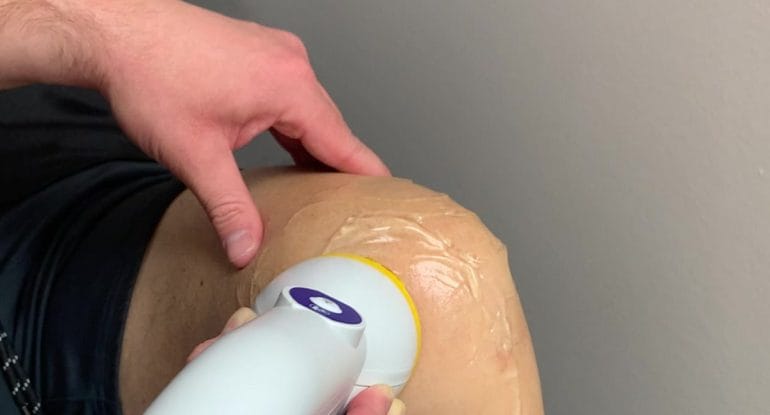
Knee arthritis can make everyday life feel smaller.
Walking the dog, climbing stairs, kneeling in the garden, getting out of a chair, golfing, working, exercising, or even standing for a long period of time can become frustrating. Many people are told they have arthritis in the knee, but they are not always given clear options between medication, injections, therapy, or eventually surgery.
Two treatments that often come up in conversation are PRP and SoftWave Tissue Regenerative Therapy.
They both aim to help the body heal and function better, but they are very different treatments.
PRP is an injection.
SoftWave Tissue Regenerative Therapy is noninvasive.
Both are used for knee pain. Both may be discussed for knee arthritis. Both are also used for other musculoskeletal conditions. But they are not the same thing, and the right option depends on the person, the stage of the knee problem, the tissues involved, and the goals of care.
Quick Answer: PRP vs SoftWave Tissue Regenerative Therapy for Knee Arthritis
PRP, which stands for platelet-rich plasma, is an injection made from your own blood. A sample of blood is drawn, processed in a centrifuge, and the platelet-rich portion is injected into the knee joint or injured tissue. PRP is commonly used for knee osteoarthritis, tendon injuries, ligament injuries, and some sports-related soft tissue problems.
SoftWave Tissue Regenerative Therapy is a noninvasive treatment that uses acoustic waves to stimulate healing responses in painful or injured tissue. Nothing is injected into the body. For knee arthritis, SoftWave Therapy is often used to help reduce pain, improve function, increase local circulation, and support the soft tissues around the knee.
One of the most exciting parts of SoftWave Tissue Regenerative Therapy is that it stimulates the body’s own repair response. Research on SoftWave Therapy suggests that it can influence cellular healing pathways, including signals involved in stem cell and progenitor cell activity. In simple terms, SoftWave Therapy is designed to help wake up the body’s repair system and promote healing cells, including stem cells, toward injured tissue.
In simple terms:
PRP puts a concentrated biological substance into the knee.
SoftWave Tissue Regenerative Therapy stimulates the body’s own healing response from the outside.
Is PRP Mostly Used for Arthritis?
In the knee, PRP is most commonly discussed for osteoarthritis, especially mild to moderate knee arthritis. That is probably why many people think of PRP as an arthritis injection.
However, PRP is not only used for arthritis.
In musculoskeletal care, PRP is also used for conditions such as:
- Patellar tendinopathy
- Achilles tendinopathy
- Tennis elbow
- Golfer’s elbow
- Rotator cuff tendon injuries
- Ligament sprains
- Muscle injuries
- Some joint injuries
- Sports-related soft tissue injuries
So the more accurate answer is this:
PRP is very commonly used for knee arthritis, but it is not only an arthritis treatment.
SoftWave Tissue Regenerative Therapy Is Also Used for More Than Knee Arthritis
SoftWave Therapy is also not just a knee arthritis treatment.
In musculoskeletal care, SoftWave Tissue Regenerative Therapy may be used for conditions such as:
- Knee osteoarthritis
- Patellar tendon irritation
- Quadriceps tendon irritation
- Plantar fasciitis
- Achilles tendinopathy
- Rotator cuff and shoulder tendon problems
- Tennis elbow
- Golfer’s elbow
- Greater trochanteric pain syndrome
- Chronic muscle strains
- Ligament sprains
- TMJ-related muscle and joint irritation
- Chronic soft tissue pain
This is an important distinction.
PRP and SoftWave Therapy are both used beyond arthritis. The difference is how they are applied and how they stimulate the body.
PRP is injection-based.
SoftWave Tissue Regenerative Therapy is noninvasive and works from the outside of the body.
What Is PRP?
PRP stands for platelet-rich plasma.
Platelets are small blood components involved in clotting and healing. They contain growth factors and signaling proteins that may influence inflammation, healing, and tissue repair.
During a PRP procedure, a healthcare provider typically takes blood from the patient, spins it in a centrifuge, separates the platelet-rich portion, and injects it into the target area. For knee arthritis, that target is often the knee joint itself.
The goal is not simply to “cover up” pain. The goal is to influence the joint environment in a way that may reduce inflammation, improve pain, and improve function.
That said, PRP is not magic, and it is not a guaranteed cartilage regrowth treatment. Results vary from person to person. The type of PRP, platelet concentration, leukocyte content, injection technique, number of injections, and severity of arthritis can all influence outcomes.
This is one reason PRP research can be difficult to interpret. Not all PRP is the same.
What Is SoftWave Tissue Regenerative Therapy?
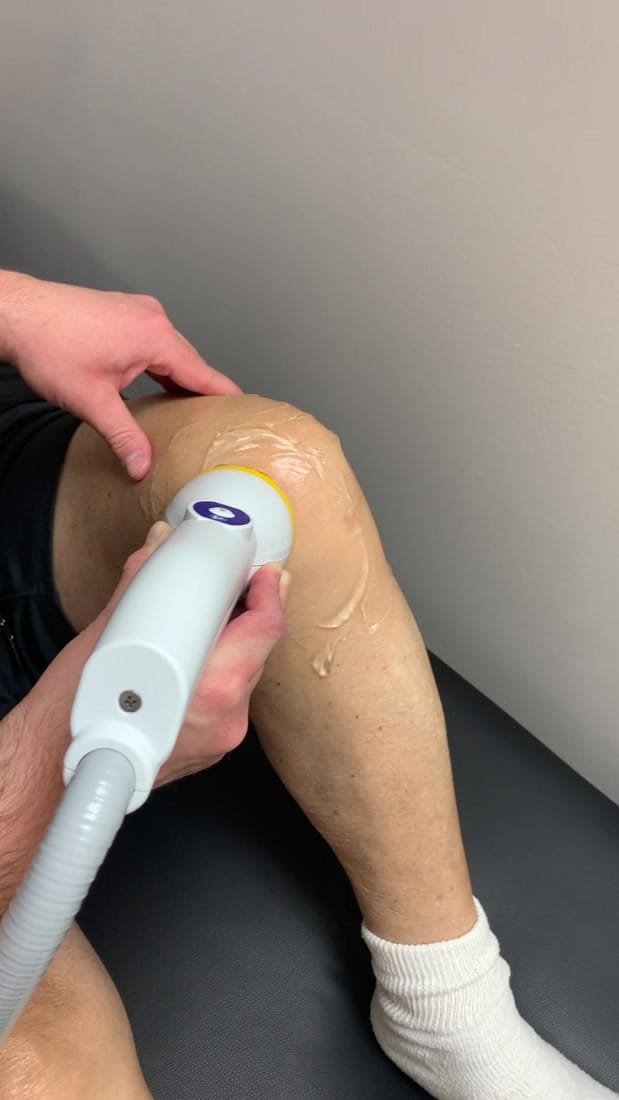
SoftWave Tissue Regenerative Therapy is a noninvasive, regenerative acoustic wave therapy. It is applied externally to the body. No needle is required. No medication is injected.
SoftWave Tissue Regenerative Therapy uses acoustic waves to create a biological response in the treated tissues. This process is often described as mechanotransduction, which means the body converts a mechanical stimulus into a cellular response.
For knee arthritis, SoftWave Therapy may be used around the joint line, patellar tendon, quadriceps tendon, surrounding ligaments, irritated soft tissues, and painful areas around the knee.
The goal is to help calm pain, improve local blood flow, stimulate repair pathways, support tissue regeneration, and improve function.
The wow factor is this:
SoftWave Tissue Regenerative Therapy helps stimulate the body’s own healing response. Research on SoftWave Therapy suggests it may influence stem cell and progenitor cell activity, including migration, proliferation, and differentiation. In plain language, it helps call the body’s repair system toward the injured area.
SoftWave Therapy does not “break up” arthritis. It does not shave bone spurs. It does not replace a knee joint. Instead, it is used to help the body respond better in painful, irritated, or chronically inflamed tissue.
PRP vs SoftWave Tissue Regenerative Therapy: Main Differences
| Category | PRP | SoftWave Tissue Regenerative Therapy |
|---|---|---|
| Type of treatment | Injection | Noninvasive therapy |
| What is used | Platelet-rich plasma from your own blood | Acoustic wave energy |
| Needle required | Yes | No |
| Blood draw required | Yes | No |
| Main target | Often inside the knee joint | Knee joint area and surrounding soft tissues |
| Common knee use | Knee osteoarthritis, tendon and ligament injuries | Knee arthritis pain, tendon irritation, soft tissue inflammation |
| Other MSK uses | Tendons, ligaments, muscles, joints, sports injuries | Tendons, ligaments, muscles, fascia, joints, chronic soft tissue pain |
| Main biological goal | Deliver concentrated platelets and growth factors | Stimulate repair pathways and promote healing cell activity |
| Stem cell connection | May influence healing through growth factors and local tissue signaling | May stimulate repair signals involved in stem/progenitor cell activity |
| Downtime | Possible soreness or swelling after injection | Usually minimal downtime |
| Main appeal | Biologic injection using your own platelets | No needles, no drugs, no surgery |
| Best fit | Often considered for mild to moderate knee arthritis or tissue injury | Often considered for painful knees, irritated tissue, tendon pain, and people wanting a noninvasive option |
How Knee Arthritis Actually Causes Pain
Many people think knee arthritis pain is only about cartilage loss.
That is part of the picture, but it is not the whole picture.
Knee arthritis can involve cartilage wear, joint inflammation, swelling, bone stress, ligament irritation, tendon overload, muscle guarding, poor movement mechanics, and changes in how the hip, ankle, foot, pelvis, and spine are moving.
This matters because pain does not always come from one structure.
A person may have arthritis on an X-ray but feel pain because the surrounding tissues are inflamed and overloaded. Another person may have advanced joint degeneration but surprisingly little pain. That is why a good assessment matters.
At Fairway Chiropractic Centre, we look at the knee, but we also look at how the whole body is loading that knee.
That includes the foot, ankle, hip, pelvis, spine, walking pattern, posture, strength, and stability.
How PRP May Help Knee Arthritis
PRP is usually aimed at the internal joint environment.
For knee osteoarthritis, the goal is to reduce pain, improve function, and potentially influence inflammation inside the joint. Some patients report meaningful improvement after PRP, especially when arthritis is not too advanced.
PRP may be considered when someone:
- Has mild to moderate knee osteoarthritis
- Has ongoing knee pain despite basic conservative care
- Wants to avoid or delay surgery
- Is comfortable with injections
- Has been assessed by a qualified medical provider
- Understands that results vary
PRP may not be the best fit for everyone. Severe bone-on-bone arthritis, major mechanical deformity, unstable joints, active infection, certain blood disorders, or unrealistic expectations may make PRP less appropriate.
It is important to speak with a qualified medical provider who performs PRP and can explain whether you are a good candidate.
How SoftWave Tissue Regenerative Therapy May Help Knee Arthritis
SoftWave Therapy is aimed at stimulating the tissues around the painful knee.
For knee arthritis, the treatment may focus on areas such as the medial joint line, lateral joint line, patellar tendon, quadriceps tendon, pes anserine area, IT band region, and other irritated soft tissues around the knee.
SoftWave Tissue Regenerative Therapy may be considered when someone:
- Wants a nonsurgical option
- Wants to avoid injections
- Has pain with stairs, walking, squatting, or standing
- Has tenderness around the knee joint or tendons
- Has chronic inflammation or soft tissue irritation
- Has knee arthritis plus tendon or ligament involvement
- Wants to improve function without relying only on medication
- Wants to stimulate the body’s own repair response
A key advantage of SoftWave Therapy is that it is noninvasive. There is no blood draw, no injection, and no medication placed into the knee.
For many patients, that makes it a more comfortable starting point.
What About Long-Term Results?
This is one of the most important questions.
PRP and SoftWave Tissue Regenerative Therapy have both helped many people reduce pain and improve function. In knee arthritis research, PRP has shown benefits for pain and function in some studies up to 6 to 12 months. SoftWave Therapy research has also shown improvements in pain and function for knee osteoarthritis, although treatment protocols and follow-up timelines vary.
Are the long-term results comparable?
Not perfectly.
The reason is that PRP and SoftWave Therapy are different treatments, and the research does not always compare them head-to-head in the same type of patient, with the same stage of knee arthritis, over the same length of time.
A fair way to explain it is this:
PRP may provide longer-lasting symptom improvement for some people with knee osteoarthritis, especially when the arthritis is mild to moderate and the PRP preparation is high quality.
SoftWave Tissue Regenerative Therapy may provide meaningful improvement in pain and function, especially when the knee pain involves irritated soft tissue, tendon overload, chronic inflammation, and poor tissue healing.
But neither treatment should be viewed as a permanent fix if the underlying cause is ignored.
That is a major part of how we think at Fairway Chiropractic Centre.
If the knee pain improves, but the person still walks poorly, has weak hips, poor foot mechanics, restricted ankle motion, poor spinal or pelvic mechanics, or continues overloading the same irritated tissue, the problem can return.
Pain relief is important.
But long-term correction requires better mechanics.
Our goal is not only to help the knee feel better.
Our goal is to help it stay better.
Why Mechanics Matter So Much
Imagine your knee is the tire on a car.
You can patch the tire, replace the tire, or treat the pain coming from the tire. But if the alignment of the car is off, the same tire may wear down again.
The body works in a similar way.
The knee is affected by what happens above and below it.
The hip controls much of the rotation and stability above the knee.
The foot and ankle influence how force enters the knee from the ground.
The pelvis and spine affect posture, movement, coordination, and loading patterns.
If those areas are not assessed, the knee may continue to absorb stress in the same painful way.
This is why Fairway Chiropractic Centre does not look at knee arthritis as only a knee problem.
We want to know why that knee became painful in the first place.
Where Chiropractic Fits Into Knee Arthritis Care
Knee pain is not always just a knee problem.
The way your spine, pelvis, hips, ankles, and feet move can affect how much stress your knee absorbs with every step. If your hip is stiff, your foot collapses, your gait is altered, or your pelvis is not moving well, the knee may take more load than it should.
That is why Chiropractic care can be helpful as part of a knee arthritis plan.
At Fairway Chiropractic Centre, we may assess:
- Knee motion
- Hip mobility
- Ankle and foot mechanics
- Gait and posture
- Pelvic and spinal movement
- Muscle strength and stability
- Balance and control
- Orthotic need
- Pain triggers with stairs, squats, walking, or kneeling
When appropriate, care may include Chiropractic adjustment, also known as spinal manipulation, soft tissue work, exercise recommendations, orthotics, movement coaching, and SoftWave Tissue Regenerative Therapy.
The goal is not only to reduce knee pain.
The goal is to help the whole body move better so the knee is not constantly being overloaded.
Related from Fairway Chiropractic:
PRP vs Cortisone vs SoftWave Tissue Regenerative Therapy
Many patients ask how PRP and SoftWave compare to cortisone.
Cortisone is typically used to reduce inflammation quickly. It may provide short-term relief, but it is not considered a regenerative treatment.
PRP is intended to use growth factors from your own blood to influence healing and inflammation.
SoftWave Tissue Regenerative Therapy uses acoustic wave energy to stimulate tissue response without an injection.
The key difference is this:
Cortisone is mainly a short-term anti-inflammatory injection.
PRP is a biologic injection.
SoftWave Tissue Regenerative Therapy is a noninvasive regenerative stimulation therapy.
Each option has a role, but each also has limitations.
Which Knee Arthritis Treatment Should You Try First?
A good starting point is a proper assessment.
Before choosing PRP, SoftWave Therapy, cortisone, braces, orthotics, exercises, or surgery, it is important to understand what is actually driving the pain.
Important questions include:
- How severe is the arthritis?
- Is the pain coming from the joint, tendon, ligament, or surrounding soft tissue?
- Is there swelling?
- Is the knee unstable?
- Does the hip or foot contribute to the knee load?
- What activities make it worse?
- What has already been tried?
- Is the goal pain relief, better function, delaying surgery, or improving performance?
For many people in Kitchener, Waterloo, and Cambridge, SoftWave Tissue Regenerative Therapy is an appealing first step because it is noninvasive and does not require medication or injections.
For others, PRP may be worth discussing with a medical provider, especially if the arthritis is mild to moderate and the patient is comfortable with injection-based care.
Final Thoughts
PRP and SoftWave Tissue Regenerative Therapy are both used in the conversation around knee arthritis, but they are very different.
PRP is an injection using a concentrated sample from your own blood.
SoftWave Tissue Regenerative Therapy is a noninvasive acoustic wave treatment that stimulates painful and injured tissue from the outside.
PRP is commonly used for knee osteoarthritis, but it is not only used for arthritis. It is also used for tendon, ligament, muscle, and joint injuries.
SoftWave Tissue Regenerative Therapy is also used for more than knee arthritis. It may be used for many musculoskeletal problems involving tendons, ligaments, fascia, muscles, joints, and chronic soft tissue irritation.
Both treatments may help with pain and function.
But at Fairway Chiropractic Centre, we believe the bigger question is this:
Why did the knee become irritated in the first place?
If the underlying mechanics are not addressed, pain can return. That is why our focus is to help the problem get better and stay better.
We assess the knee, but we also assess the way the whole body is loading the knee. That includes the foot, ankle, hip, pelvis, spine, posture, gait, strength, and stability.
That is how we help people move better, function better, and make more confident decisions about their care.
Request a Free Phone Consultation
If you are dealing with knee arthritis or chronic knee pain in Kitchener, Waterloo, or Cambridge, you can request a free phone consultation with Fairway Chiropractic Centre to see whether SoftWave Tissue Regenerative Therapy, Chiropractic care, orthotics, or another option may be appropriate for your situation. You can also call us at 519-748-5535.
Frequently Asked Questions
What is the main difference between PRP and SoftWave Tissue Regenerative Therapy?
PRP is an injection made from your own blood. SoftWave Tissue Regenerative Therapy is a noninvasive treatment applied from outside the body. PRP places platelet-rich plasma into the target area, while SoftWave Therapy stimulates the body’s repair response using acoustic energy.
Is PRP mostly used for knee arthritis?
PRP is commonly used for knee osteoarthritis, especially mild to moderate cases, but it is not only used for arthritis. It is also used for some tendon, ligament, muscle, joint, and sports-related injuries.
Is SoftWave Tissue Regenerative Therapy only used for knee arthritis?
No. SoftWave Tissue Regenerative Therapy may be used for many musculoskeletal conditions, including plantar fasciitis, Achilles tendinopathy, tennis elbow, golfer’s elbow, rotator cuff problems, patellar tendon irritation, chronic muscle strains, ligament sprains, TMJ irritation, and knee arthritis.
Does SoftWave Tissue Regenerative Therapy promote stem cells to the injured area?
SoftWave Therapy stimulates biological repair pathways in injured tissue. Research on SoftWave Therapy suggests it may influence stem cell and progenitor cell activity, including migration, proliferation, and differentiation. In simple terms, it helps activate the body’s own repair response and promotes healing cells toward the injured area.
Does SoftWave Therapy regrow cartilage in the knee?
SoftWave Therapy should not be presented as a guaranteed cartilage regrowth treatment. Its goal is to reduce pain, improve function, support local circulation, stimulate repair pathways, and help irritated tissues respond better.
Are PRP and SoftWave Therapy long-term results comparable?
They are not perfectly comparable because the studies, protocols, and patient groups are different. PRP may provide pain and function improvement for some people with knee osteoarthritis up to 6 to 12 months. SoftWave Therapy also has evidence for improving pain and function in knee osteoarthritis. For both treatments, long-term success is more likely when the underlying body mechanics are also addressed.
Why does Fairway Chiropractic Centre assess more than just the knee?
Because knee pain is often affected by how the whole body moves. The foot, ankle, hip, pelvis, spine, posture, gait, strength, and stability can all influence how much stress goes through the knee. If those mechanics are not corrected, pain may return even after treatment helps.
Is PRP better than SoftWave Tissue Regenerative Therapy for knee arthritis?
Not always. PRP and SoftWave Therapy work differently. PRP may be a better fit for someone seeking an injection-based biologic treatment for the joint. SoftWave Therapy may be a better fit for someone wanting a noninvasive option for knee pain, tendon irritation, soft tissue inflammation, and stimulation of the body’s repair response.
Can PRP and SoftWave Therapy be used together?
In some cases, different regenerative or conservative therapies may be used as part of a broader plan, but they should not be combined randomly. Timing, diagnosis, inflammation level, tissue health, and provider coordination matter.
About the Author
Dr. Nik Dukovac, B.Sc., D.C.
Chiropractor | Fairway Chiropractic Centre
Dr. Nik Dukovac is a Chiropractor at Fairway Chiropractic Centre in Kitchener, Ontario. His clinical focus includes spinal neurobiomechanics, appropriate-force Chiropractic care, spinal decompression, SoftWave Tissue Regenerative Therapy, knee pain, sports injuries, chronic pain, and helping patients understand conservative options before considering more invasive care.
References and Further Reading
- American Academy of Orthopaedic Surgeons. Management of Osteoarthritis of the Knee, Non-Arthroplasty Clinical Practice Guideline. This guideline reviews non-surgical options for knee osteoarthritis, including platelet-rich plasma and extracorporeal shockwave therapy. It is useful for showing that both PRP and shockwave therapy are discussed within mainstream orthopedic evidence.
- Pelluri R, et al. Effect of platelet-rich plasma versus placebo or corticosteroids for knee osteoarthritis: A systematic review and meta-analysis. 2024. This review found that PRP showed better results than placebo and corticosteroid injections for reducing pain and improving function in knee osteoarthritis. It supports the section explaining why PRP is commonly discussed for knee arthritis.
- Belk JW, et al. Platelet-Rich Plasma Versus Hyaluronic Acid for Knee Osteoarthritis: A Systematic Review and Meta-analysis. American Journal of Sports Medicine. 2021. This paper is useful for explaining PRP as a biologic injection option for knee osteoarthritis and comparing it with other injection-based treatments.
- Johns Hopkins Medicine. Platelet-Rich Plasma (PRP) Injections. This is a patient-friendly medical source that explains what PRP is, how it is prepared, and why it is used for more than arthritis, including tendon, ligament, muscle, and joint injuries.
- Liao PC, et al. A systematic review of the use of shockwave therapy for knee osteoarthritis. 2024. This review supports the use of extracorporeal shockwave therapy for knee osteoarthritis and notes that treatment parameters such as energy level and number of shocks may influence results.
- Tang P, et al. The efficacy of extracorporeal shock wave therapy for knee osteoarthritis: An umbrella review. 2024. This review concluded that extracorporeal shockwave therapy can improve pain and function in people with knee osteoarthritis. It supports the section discussing SoftWave Tissue Regenerative Therapy for knee arthritis.
- Chen TY, et al. A systematic review of dose-response meta-analysis of extracorporeal shockwave therapy for knee osteoarthritis. 2024. This paper is useful for explaining that shockwave therapy outcomes may depend on treatment dose, energy level, and protocol.
- Simplicio CL, et al. Extracorporeal shock wave therapy mechanisms in musculoskeletal regenerative medicine. 2020. This paper explains proposed mechanisms of shockwave therapy, including pain relief, vascularization, cell proliferation, protein biosynthesis, tissue repair, and regenerative responses in musculoskeletal conditions.
- Kou D, et al. The application of extracorporeal shock wave therapy on stem cells. 2024. This review supports the discussion that shockwave therapy may influence stem cell and progenitor cell activity, including migration, proliferation, differentiation, and recruitment. This is the scientific basis for explaining that SoftWave Tissue Regenerative Therapy helps stimulate the body’s own repair response.
- Weihs AM, et al. Shock wave treatment enhances cell proliferation and improves wound healing by ATP release-coupled extracellular signal-regulated kinase activation. 2014. This mechanistic study helps support the biological explanation that shockwave stimulation can activate cellular pathways involved in tissue repair.
- An S, et al. Extracorporeal shockwave treatment in knee osteoarthritis. 2020. This review discusses shockwave therapy for knee osteoarthritis, including effects on pain, function, cartilage, subchondral bone, and the uncertainty around ideal treatment dosage and frequency.
- CADTH Health Technology Review. Platelet-Rich Plasma Injections for Chronic Tendinopathies in the Lower Extremities. This source is helpful for showing that PRP is not only used for arthritis. It is also discussed in the context of lower-extremity tendon conditions.